




Early Warnings You Cannot Ignore
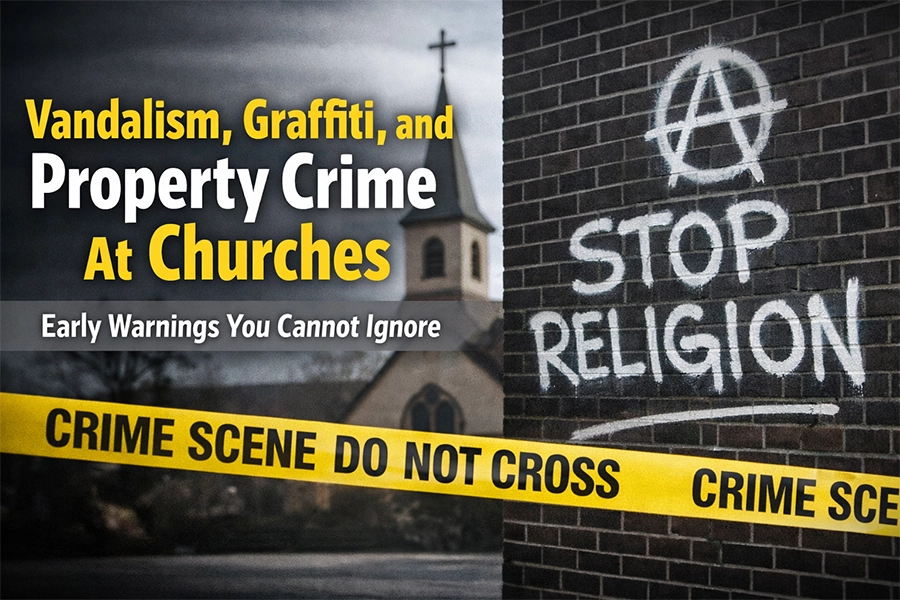
Vandalism, graffiti, and property crime at churches are not just annoying maintenance issues. They are warning signs that your ministry is visible, vulnerable, and potentially being tested by people who may come back with greater harm. As Safety Team members and Safety Directors, we need to treat church vandalism as both a spiritual attack on sacred space and a practical security problem we can prepare for.
In this article, we will walk through what vandalism and property crime look like in churches today, how to interpret it, and what you can do to prevent, respond, and shepherd your people well.
Why Vandalism At Churches Matters More Than It Seems
Recent data confirms what many of us have felt on the ground: hostility against churches is real and persistent.
Family Research Council’s 2025 edition of Hostility Against Churches in the United States documented 415 hostile incidents against churches in 2024, and vandalism made up 284 of those cases. That means vandalism was by far the most common form of hostility, ahead of arson, bomb threats, gun incidents, and other crimes.
At the same time, the FBI reports that hate crime incidents in the United States remain at historically high levels, with 11,679 hate crime incidents recorded in 2024. Houses of worship are part of that picture as religious communities continue to be targeted.
A few important lessons grow out of this:
- Vandalism is not rare or random. It is now the most common form of hostility against churches tracked in national reports.
- You might not be the only target. Law enforcement and insurers note that vandalism on one church or ministry often occurs as part of a string of incidents in a city or neighborhood.
- Vandalism can be a “test run.” People who intend greater harm sometimes start with low level crimes to see how the church responds, what cameras exist, and whether anyone notices.
If your church has experienced graffiti, broken windows, or attempts to damage property, you are not alone. The key is not to shrug it off but to respond with wisdom, documentation, and a plan.
What Counts As Vandalism, Graffiti, And Property Crime At Churches?
Before we talk about response and prevention, it helps to define the problem in plain language.
Basic definitions
- Vandalism
Intentional damage or defacement of property. For churches this can include broken windows, damaged doors, smashed lights, destroyed landscaping, or damaged pews and fixtures.
- Graffiti
Words, symbols, or images unlawfully painted, sprayed, or etched on church property. Graffiti often carries messages that may be political, obscene, satanic, gang related, or anti Christian.
- Property crime
A broader category that includes theft, burglary, arson, and damage to vehicles, HVAC units, copper wiring, catalytic converters, and other assets.
Common forms of property crime at churches
Most churches see patterns over time. Some of the most frequent include:
- Broken windows and doors
Often occur around entrances, classrooms, or offices and may precede or follow a break in.
- Spray painted messages or symbols
Anti Christian slurs, satanic symbols, political slogans, or personal tags across exterior walls, doors, or signs.
- Theft of metal and equipment
Copper from HVAC units, catalytic converters from vans and buses, outside A/C cages, and sometimes sound or AV equipment from poorly secured rooms.
- Damage to vehicles in the parking lot
Slashed tires, broken mirrors, or smashed windows during services, youth nights, or midweek events.
- Damage inside the building
Restroom fixtures, nursery toys, or furniture broken during off hours or events.
Some of these acts are random or opportunistic. Others are targeted and hostile. From a safety standpoint, you treat them all as data points in your risk picture.
What Does The Bible Say About Protecting God’s House?
Scripture gives us both the heart and the posture for dealing with vandalism and property crime at churches.
- Stewardship and foresight
Proverbs describes the prudent person as someone who sees trouble coming and takes refuge, while the simple keep going and pay the penalty. We honor God when we see patterns of hostility and adjust.
- Nehemiah as a model
When rebuilding Jerusalem’s walls, Nehemiah prayed, posted guards, set watches by night and day, and equipped workers to build with tools in one hand and defensive gear in the other. He did not choose between faith and security. He practiced both.
- Wise as serpents, harmless as doves
Jesus told His disciples to be wise and innocent at the same time. That applies directly when we respond to vandalism. We do not respond with hatred or revenge, but we also do not ignore clear risk.
- Overcoming evil with good
Romans 12 calls us to overcome evil with good, not be overcome by it. That may mean showing grace to a teen who confesses to graffiti and making space for repentance, while still honoring the law and protecting the congregation.
The point is simple: it is biblical to take vandalism seriously and to respond in a way that is both spiritually grounded and tactically smart.
Risk Factors That Increase Vandalism And Property Crime At Your Church
Every church is unique, but certain conditions consistently increase the likelihood of vandalism, graffiti, and property crime at churches.
Facility and environmental risk factors
- Poor lighting around doors and parking areas
Dark corners, long stretches of unlit sidewalk, and shadowed entrances create cover for vandals.
- Limited natural surveillance
Large shrubs, dumpsters, or outbuildings that block sightlines allow people to hide from view.
- Easy access to roofs, sheds, and HVAC
Unprotected ladders, low flat roofs, and open mechanical areas invite trespassing and copper theft.
- Hidden or isolated areas
Back doors that are never used, courtyards that are out of sight, or alley facing walls are prime graffiti zones.
These are classic Crime Prevention Through Environmental Design (CPTED) issues. Adjusting the environment changes offender behavior.
Operational and schedule risk factors
- Long periods when the building is empty
Churches that sit vacant five or six days a week are attractive to vandals, especially at night.
- Regular cash handling with weak controls
If thieves learn that offerings, petty cash, or equipment are easy to access, they may keep coming back.
- Unclear closing and lockup procedures
When everyone assumes someone else locked the door, doors stay propped or unlocked.
Community and cultural risk factors
- Recent controversial issues or public stances
Churches that have taken a clear public position on a hot cultural topic may attract hostile graffiti or threats.
- Online harassment or threats
Social media campaigns, hostile comments, or doxing can spill over into physical acts at the building.
- Location in an area with rising crime or targeted religious hostility
National and local data show that houses of worship are part of larger patterns of hate crimes and ideological hostility.
None of these factors doom your church to vandalism. They simply help you recognize where to focus your energy.
How To Assess Your Church’s Vulnerability To Vandalism
You do not need a law enforcement background to do a solid vulnerability assessment. You need a plan, a team, and time on the property.
CISA’s houses of worship security guides recommend starting with a basic vulnerability assessment that looks at your site, building, operations, and community context.
Here is a simple, church friendly framework.
Step 1: Review your incident history
- Make a list of past vandalism, theft, or suspicious behavior on or near church property.
- Note dates, locations, and any patterns (time of day, specific doors, certain events).
- Include parking lot issues, shed break ins, and graffiti at signs or monuments.
Step 2: Walk your campus in daylight and at night
- In daylight, look for areas that are hidden, weak points in fencing, and high value targets like HVAC units and vehicles.
- At night, walk the same path and see what a vandal would see. Note dark corners, shadowed entrances, and any camera blind spots.
Step 3: Map your “outer, middle, and inner” perimeters
CISA recommends thinking in layers: outer perimeter (property line and parking lots), middle perimeter (building exterior), and inner perimeter (interior spaces).
- Identify how a person would reach each layer and what barriers or deterrents they encounter.
- Ask: “What would it take for someone with spray paint to reach this wall without being challenged or seen?”
Step 4: Talk with law enforcement and your insurer
- Ask your local police about calls for service in your area, patterns of vandalism, and recommended steps.
- Check with your insurer or risk management partner for church specific checklists and guidance. Brotherhood Mutual and others provide free resources on vandalism and property protection for ministries.
Document what you find. This becomes the foundation for your prevention plan.
Practical Measures To Prevent Vandalism, Graffiti, And Property Crime
Prevention is not about turning your church into a fortress. It is about making it harder to offend and easier to detect, while still remaining welcoming and mission focused.
Strengthen your physical security baseline
Start with inexpensive, high impact steps:
- Improve exterior lighting
Make sure entrances, sidewalks, parking lots, and signs are well lit throughout the night. Use motion activated lights at corners and isolated doors to draw attention to movement.
- Protect high risk areas
Install cages or barriers around HVAC units, mount cameras to view outbuildings and sheds, and use bollards or barriers where vehicles can drive close to the building.
- Upgrade locks and hardware
Replace weak locks, use longer screws in strike plates, and ensure exterior doors latch properly. A door that does not latch is an open invitation.
- Use cameras strategically
Cameras are most valuable when they cover entrances, parking lots, and graffiti prone walls and when someone actually reviews the footage after an incident.
- Secure moveable items
Anchor outdoor benches, improve locking on sheds, and avoid leaving ladders, tools, or paint accessible outside.
CISA’s perimeter security guidance for houses of worship provides practical examples of these types of measures tailored to faith settings.
Use signage and visible boundaries
Clear boundaries deter some opportunistic offenders and help law enforcement.
- Post no trespassing or property closed after hours signs at main entrances.
- Use video surveillance in use signage where cameras are present.
- Clearly mark private areas like staff parking or mechanical yards.
This combination communicates that someone is paying attention and that law enforcement can act if people are on the property after hours.
Protect high value and high consequence targets
Not every asset is equal. Focus on items that are either costly to replace or critical to ministry continuity.
- Vehicles and trailers
Park them in lighted areas near the building, use wheel locks or hitch locks, and consider camera coverage.
- HVAC and electrical systems
Use cages, fencing, or locked enclosures and check them regularly for tampering.
- Office and offering areas
Keep offerings secured, limit access to keys and codes, and ensure computers and records are not easily stolen.
- Exterior signs, monuments, and crosses
These are common graffiti targets. Good lighting and camera coverage go a long way.
Build community and law enforcement partnerships
Prevention of vandalism, graffiti, and property crime at churches is not a solo project.
- Request extra patrols during high risk seasons or after an incident.
- Coordinate with neighbors and encourage them to report suspicious activity on church grounds.
- Participate in or start a neighborhood watch and share information on patterns of vandalism in your area.
Relationships pay off later when you need quick response, better intel, or help processing a disturbing incident.
How Should A Church Respond When Vandalism Or Graffiti Happens?
The first instinct is often to rush out and clean everything up as quickly as possible. While fast cleanup is important, there is a right order that protects your people and preserves evidence.
Here is a simple response checklist you can adapt to your safety plan.
1. Secure the scene and check for safety
- Make sure the vandal is gone and there is no immediate threat.
- Watch for hazards like broken glass, exposed wires, or flammable liquids.
2. Treat it as a potential crime scene
- Avoid touching or stepping on obvious evidence such as spray cans, rocks, or tools.
- Keep people away from the damaged area until photos and documentation are complete.
3. Call law enforcement and file a report
Insurers and security experts emphasize the importance of reporting vandalism to law enforcement, especially when graffiti includes threats or hateful messages.
- Call 911 if the vandalism is in progress or involves threats, fire, or weapons.
- For discovered damage, use non emergency channels but still request an officer and a report number.
- Clearly state if the damage appears to target your church because of its Christian identity or particular stances. This may qualify as a potential hate motivated incident.
4. Document thoroughly
- Take clear photos of all damage before anything is cleaned, removed, or painted over.
- Capture close ups and wide shots showing the damage in context.
- Note date, time of discovery, who found it, and any relevant observations.
These records may be important for insurance, law enforcement, and future threat assessments.
5. Coordinate cleanup with law enforcement and leadership
- Ask officers on scene whether they need to collect fingerprints, DNA, or other evidence before you begin cleanup.
- Once cleared, move quickly to remove graffiti, especially obscene or threatening language. Quick removal reduces the “reward” for offenders and can discourage repeat tags.
6. Update your internal incident log
Every incident of vandalism, graffiti, and property crime at churches should be recorded, even if the cost seems minor.
- Track date, location, type of damage, any suspects, and report numbers.
- Look for patterns over months and years. Multiple incidents at the same door, sign, or vehicle area may indicate surveillance or targeting.
7. Communicate wisely with your congregation
The goal is to inform without creating fear.
- Brief your pastor, elders, and key ministry leaders.
- Decide how much to share publicly. In some cases, a simple statement that there was vandalism, that police were involved, and that safety steps are underway is enough.
- Provide pastoral care to those who feel shaken, especially if the graffiti is blasphemous, threatening, or targeted to a particular group.
Training Volunteer Safety Teams For Property Crime And Vandalism
Most church Safety Teams are made up of volunteers who love their church but do not have law enforcement backgrounds. They can still be highly effective if trained intentionally.
Core skills every team member needs
- Awareness and recognition of suspicious behavior
People loitering near buildings at odd hours, repeatedly driving through the lot, or approaching HVAC and utility areas need attention.
- Safe approaches and non confrontational language
Teach team members how to greet unknown persons on property with a friendly, confident tone: “Hi, may I help you?” CISA’s “Power of Hello” material is a useful model here.
- Clear escalation paths
When a team member discovers vandalism in progress, they should know when to simply observe and call 911, and when it is appropriate to give a verbal directive from a safe distance.
- Radio and communication procedures
Decide ahead of time what codes or plain language you will use to report suspicious activity, damage, or a suspected break in.
Scenario based training ideas
Use short, realistic scenarios during team meetings or Sunday Safety Talks:
- A team member arrives early and finds hateful graffiti on the main entrance.
- A volunteer sees two teens behind the building with backpacks and spray cans.
- A neighbor reports someone repeatedly walking through the parking lot at 2 a.m.
- A van has a broken window and items scattered on the ground during a service.
Walk through what the team member should do step by step: personal safety first, radio traffic, call to law enforcement, documentation, and follow up.
How To Talk About Vandalism With Your Church Without Creating Panic
Our goal is to protect the flock, not alarm them. Handling communication well is part of that stewardship.
Principles for wise communication
- Tell the truth, but frame it with hope.
Acknowledge that vandalism occurred, that law enforcement has been notified, and that your Safety Team is taking concrete steps to reduce risk.
- Focus on stewardship, not fear.
Emphasize that caring for the building and grounds is part of stewarding what God has entrusted to your church and protecting space for ministry.
- Give the congregation practical ways to help.
Invite members to:
- Report suspicious activity on church property.
- Pray for those who vandalized the church and for their repentance.
- Participate in workdays that improve lighting, landscaping, and cleanup.
- Model grace and firmness at the same time.
It is possible to press charges when appropriate and still offer pastoral care or restorative conversations, especially if the offender is a young person connected to the church.
Key Takeaways
For busy Safety Teams and ministry leaders, here are the core points to remember about vandalism, graffiti, and property crime at churches:
- Vandalism is now the most common hostile act against churches in national tracking, so your church is not alone and should not be surprised when it happens.
- Every incident is data. Treat graffiti and property damage as part of your threat picture, not just a maintenance task.
- Environment matters. Lighting, sightlines, and protected assets can dramatically reduce opportunities for vandalism.
- Your response should be calm, documented, and lawful. Preserve evidence, file reports, and involve your insurer and law enforcement.
- Volunteer Safety Teams can learn these skills. With simple training and clear procedures, non professionals can effectively deter, detect, and respond.
- Our response is spiritual as well as tactical. We protect God’s house with prudence and courage, while praying for offenders and choosing not to be ruled by fear.
Take The Next Step In Your Church Safety Training
This overview only scratches the surface of what your team needs to know about vandalism, graffiti, and property crime at churches. The patterns are changing, the incidents are increasing, and churches that respond with intentional training will be better prepared to protect both people and property.
If you are ready to build a stronger foundation:
- Enroll your team in the Safety Member Certification through Sheepdog Church Security Academy.
We go deeper into situational awareness, patrol procedures, property crime response, and coordination with law enforcement, all in a structured, faith aligned program.
- Review your current Church Safety Plan.
Add a section that covers vandalism and property crime: prevention measures, incident response, documentation, and communication.
- Schedule a walk through this week.
Take one evening to walk your campus, inside and out, and identify at least three practical improvements you can make in the next 30 days.
Your church building is not sacred because of brick and drywall. It is sacred because it houses worship, discipleship, and the gathering of God’s people. Caring for that space is an act of stewardship and love. Let’s be faithful in it.