




Optimal Use of Force
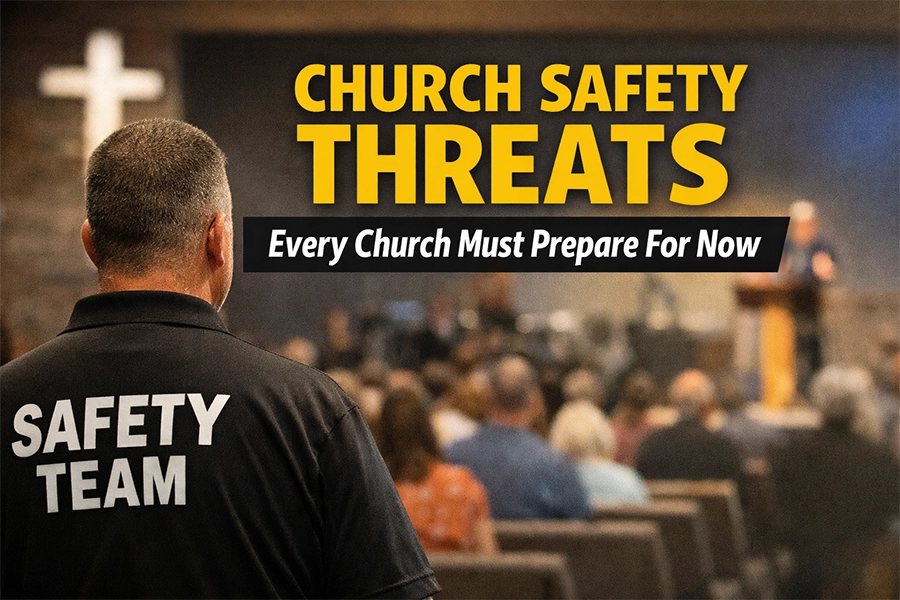
Church Safety Teams and Safety Directors across the country are facing a reality many never expected. The threat environment facing houses of worship has changed, intensified, and diversified. In the past 90 days alone, churches, synagogues, and mosques have been targeted by arson, bomb plots, armed intimidation, swatting hoaxes, and violent disruptions. This is no longer a distant concern or a problem for “big city churches.” It is a present, nationwide issue that directly affects volunteer-based church safety teams serving faithfully every week.
This article is written for church Safety Team members, Safety Directors, pastors, and ministry leaders who want to protect their congregations wisely, lawfully, and biblically. Drawing from the most recent Threat Intelligence Report compiled by Sheepdog Church Security, this guidance translates hard intelligence into practical, actionable steps that churches of any size can implement today.
Why the Threat to Churches Is Currently Elevated
The current threat level to houses of worship has been assessed as Elevated based on verified law enforcement data, federal charging documents, and corroborated media reports. This designation is not theoretical. It reflects real incidents, real arrests, and real disruptions to worship.
Over the last quarter, at least a dozen serious incidents were documented, including hate-motivated arsons, foiled mass-violence plots, armed individuals entering worship spaces, and coordinated swatting attacks. These incidents targeted Christian churches, Jewish synagogues, and Muslim mosques alike, showing that no single faith group is exempt.
What is especially concerning is the diversity of threats. Some attackers were ideologically motivated extremists. Others were individuals in mental health crisis. Some sought mass casualties. Others aimed for disruption, fear, or symbolic destruction. From a church safety perspective, the result is the same. The risk is real, unpredictable, and often fast-moving.
What Types of Threats Are Churches Facing Today?
Arson as a Primary Weapon
One of the most consistent patterns is the use of arson against houses of worship. Churches and synagogues have been burned using ordinary, easily accessible accelerants like gasoline. These attacks are often conducted late at night or in the early morning hours to maximize damage while avoiding confrontation.
In multiple cases, entire church buildings were destroyed, displacing congregations for months and causing millions of dollars in damage. Arson is attractive to attackers because it requires little expertise, minimal equipment, and offers a high psychological and symbolic impact.
For churches, this means exterior security and after-hours protection can no longer be an afterthought.
Bomb Threats, Explosives, and Hoaxes
While no mass-casualty bombing occurred in this period, several credible plots were disrupted, including one involving a large cache of improvised explosive devices intended for a high-profile cathedral service. In addition, bomb hoaxes and swatting incidents surged, particularly targeting Jewish institutions around religious holidays.
Swatting works because it exploits our systems of care. Even false threats force evacuations, police responses, and fear-filled disruptions. Over time, repeated hoaxes strain congregations and emergency responders alike.
Church safety teams must be prepared to treat every threat seriously while responding calmly and methodically.
Armed Disruptions and Intimidation
Several incidents involved armed individuals entering or approaching houses of worship. In some cases, the individual was known to the congregation and experiencing a mental health crisis. In others, the motive was unclear.
What these incidents reveal is a dangerous gap. Churches often struggle to distinguish between compassion and caution. Biblical hospitality does not require unguarded access, especially when warning signs are present.
What Do These Incidents Reveal About Church Security Gaps?
Across these cases, common weaknesses emerged.
Uncontrolled access points allowed strangers to enter unchecked. Exterior areas like parking lots and steps went unmonitored. Fire detection and surveillance systems were inconsistent or nonexistent. Volunteer teams lacked training and clear authority. Communication was delayed or confused, sometimes resulting in incidents going unreported for days.
These are not failures of faith. They are gaps in planning.
Scripture reminds us that “the prudent see danger and take refuge” (Proverbs 22:3). Prudence is not fear. It is foresight applied with wisdom.
How Should Churches Respond to This Threat Environment?
Strengthen Perimeter and Exterior Security
Given the prevalence of arson and external approaches, churches must prioritize their perimeter. Well-lit exteriors, motion-activated lighting, secured dumpsters, and removal of flammable materials near buildings are simple but effective steps.
Exterior cameras serve two purposes. They deter some offenders and provide critical evidence when incidents occur. In one major arson case, surviving camera footage played a decisive role in identifying and convicting the attacker.
If possible, churches should coordinate with local law enforcement to include their facilities in routine patrol routes, especially overnight and before major services or holidays.
Control Access Without Abandoning Hospitality
Open doors are part of church culture, but uncontrolled access is a recurring vulnerability. Trained ushers and safety volunteers should monitor entrances, greet attendees, and discreetly observe behavior.
Hands concealed in pockets, visible agitation, refusal to engage, or inappropriate behavior near children are warning signs that require action. Hospitality includes protecting the flock from disruption and harm.
Prepare for Bomb Threats and Swatting
Every church should have a written bomb threat and swatting response plan. Staff and volunteers must know exactly what to do if a threat is received.
A calm, rehearsed response prevents panic. Churches should designate a liaison to meet responding officers, provide building maps, and coordinate communication. Clear messaging to the congregation reduces fear and rumor-driven chaos.
Drills matter. The successful evacuation of preschool children during a swatting incident demonstrated the value of preparation under pressure.
Train and Equip Volunteer Safety Teams
Many incidents were mitigated because alert volunteers noticed something wrong and acted decisively. Training turns good intentions into effective action.
Volunteer safety teams should receive instruction in:
- Threat recognition and behavioral indicators
- De-escalation techniques
- Emergency communication protocols
- Fire extinguisher use
- Medical response for trauma and bleeding
Training should be scenario-based, realistic, and aligned with local laws. Armed security, where permitted, must be vetted, coordinated with law enforcement, and regularly trained to avoid tragic misunderstandings.
How Should Churches Address Mental Health-Related Incidents?
Several incidents involved individuals in mental health crisis rather than ideological extremists. From a safety perspective, motive does not change risk.
Churches should encourage early reporting of concerning behavior. Leadership should feel empowered to involve law enforcement and mental health professionals without shame or delay.
Romans 13 affirms the role of governing authorities in maintaining order. Calling for help is not a failure of pastoral care. It is often an act of love for the individual and protection for the congregation.
What Does the Bible Say About Church Security?
Scripture consistently affirms the responsibility of shepherds to protect the flock. Nehemiah rebuilt the wall with one hand while holding a weapon with the other. Jesus acknowledged that threats exist and that wisdom requires preparedness.
Security ministry is not about fear or violence. It is about stewardship. Protecting life, preserving the ability to worship freely, and ensuring that the vulnerable can gather safely honors God.
Faith and preparation are not opposites. They are partners.
Key Lessons Church Safety Teams Must Internalize
- Churches are being targeted across denominations, regions, and sizes.
- Arson and hoax threats are low-cost, high-impact tools for attackers.
- Most attacks exploit predictable gaps in access, visibility, and response.
- Volunteer teams can make a decisive difference when trained and empowered.
- Coordination with law enforcement and neighboring faith communities strengthens resilience.
Practical Action Steps for the Next 30 Days
Church leaders should consider these immediate priorities:
- Review and lock unused doors during services.
- Test exterior lighting, alarms, and fire detection systems.
- Refresh emergency communication plans and rehearse them.
- Conduct a basic perimeter and facility walkthrough with safety volunteers.
- Establish or update relationships with local law enforcement.
- Encourage congregants to report suspicious behavior early.
These steps do not require large budgets. They require clarity, commitment, and leadership.
Key Takeaways for Church Safety Directors and Teams
- The threat environment is elevated and dynamic.
- Preparation reduces fear and chaos.
- Training transforms volunteers into capable guardians.
- Biblical faith supports wise security planning.
- Doing nothing is no longer a neutral choice.
Take the Next Step: Get the Threat Intelligence Briefing This Article Is Based On
This article is not theoretical. It is based directly on our 90-Day Threat Intelligence Briefing, a field-informed assessment trusted by church Safety Directors and volunteer Safety Teams across the country. The incidents, patterns, and recommendations you just read come from verified law enforcement data, federal charging documents, and real-world cases affecting churches right now.
If you want your entire Safety Team to see the same intelligence, context, and practical guidance, I strongly encourage you to download the full briefing.
New Threats Are Emerging. Is Your Church Ready?
Download the 90-Day Threat Intelligence Briefing Trusted by Church Safety Leaders.
This free digital download will help you:
- Understand how recent terror plots, extremist trends, arson attacks, and swatting tactics are impacting churches like yours.
- Use real incidents from the last 90 days to inform lockdown, evacuation, and response decisions based on your church’s size and layout.
- Build smarter relationships with local police, fusion centers, and faith-based partners for faster, more effective crisis response.
- Cut through fear, rumors, and speculation with clear, no-fluff intelligence pulled from confirmed law enforcement sources.
This briefing is written for volunteer-based church safety teams, not professionals with law enforcement backgrounds. It is practical, readable, and easy to share with your team.
I founded Sheepdog Church Security to equip churches with real-world training and tools to protect their people. After years in law enforcement and military service, I saw too many churches caught off guard by threats they never saw coming. This briefing is one more way we help churches stay prepared, not scared.
Churches are being targeted, but most teams do not know what to look for until it is too late. This free download gives you real-world intelligence, not theory. No fluff. No jargon. Just the facts and practical steps to protect your people.
Download the Threat Intelligence Briefing now and equip your Safety Team with clarity, confidence, and actionable insight.