




Building Trust
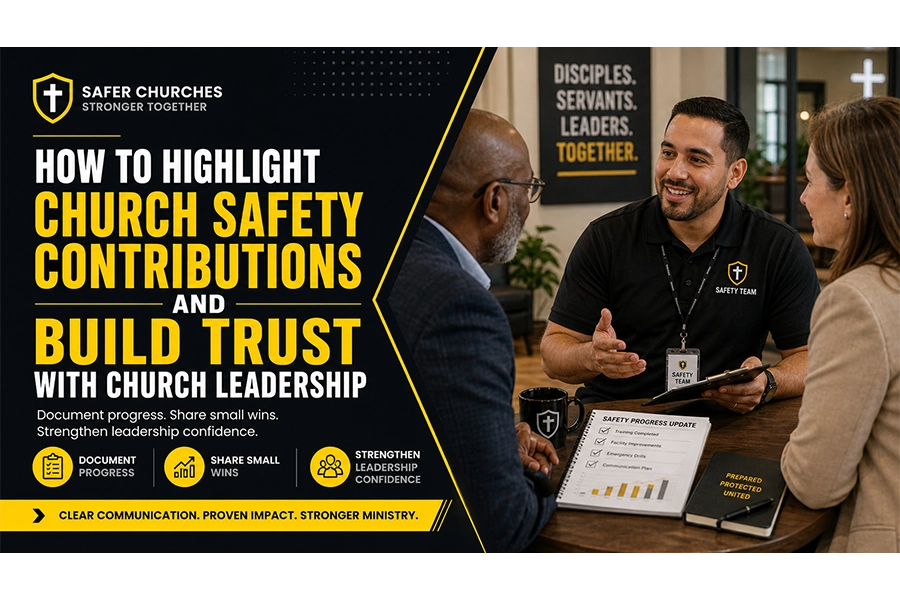
Church safety contributions often go unnoticed unless Safety Directors and volunteer teams communicate their progress clearly. For churches building a safer congregation, recognizing small wins helps leaders see the value of training, preparation, and faithful service.
Many church Safety Teams serve quietly. They attend training, review procedures, walk the property, help during services, respond to concerns, and prepare for emergencies that may never happen. That quiet faithfulness matters. But if church leadership never hears about the progress being made, they may not fully understand how the Safety Team is strengthening the church.
The Recognition Guide: Highlighting Your Church Safety Contributions helps Safety Directors and team leaders share progress in a clear, humble, and practical way. This is not about seeking applause. It is about building trust, showing accountability, and helping church leaders see how safety efforts directly support the mission of the church.
A strong church safety culture grows when leaders understand what is being done, why it matters, and how it benefits the congregation.
Key Takeaways
Church safety contributions should be documented, communicated, and connected to ministry impact. When Safety Teams share progress regularly, they help church leadership make informed decisions and build confidence in the team’s work.
The most effective approach is simple:
- Document achievements. Keep track of completed training, certifications, new protocols, equipment updates, drills, and incident responses.
- Communicate progress clearly. Share specific milestones with church leadership through brief updates, reports, meetings, or visual summaries.
- Build trust through transparency. Explain how each safety step protects the congregation and invite feedback from leaders.
- Recognize small wins. Small improvements show momentum and help the church stay engaged in safety without becoming overwhelmed.
Regular updates help church leaders see that safety is not just a concern. It is an active ministry of care.
Why Should Churches Recognize Safety Team Contributions?
Churches should recognize Safety Team contributions because safety work is often preventive, quiet, and behind the scenes. When preparation is successful, problems may be reduced, confusion may be avoided, and emergencies may be handled more smoothly. But because many of those benefits are not always visible, leaders need clear updates to understand the impact.
Recognition does not mean turning Safety Team members into the center of attention. The goal is not pride. The goal is stewardship.
A volunteer who completes safety training is better prepared to serve. A team that practices a medical response drill is better prepared to care for someone in need. A church that installs better communication tools or improves its children’s ministry procedures is taking practical steps to protect the flock.
These are meaningful church safety contributions. They deserve to be documented and shared appropriately.
When leaders see progress, they are more likely to support future training, approve needed resources, encourage volunteers, and communicate the importance of safety to the congregation.
What Are Church Safety Contributions?
Church safety contributions are the specific actions, improvements, and service efforts that help make the church a safer place to worship, gather, and serve. These contributions may come from Safety Team members, pastors, ministry leaders, ushers, greeters, children’s workers, facilities volunteers, or administrative staff.
Examples of church safety contributions include:
- Completing Safety Team training or certification
- Reviewing emergency response procedures
- Conducting a facility walkthrough
- Improving parking lot visibility or lighting
- Updating children’s ministry check-in procedures
- Practicing a severe weather or medical response drill
- Installing or maintaining first aid kits, radios, cameras, or AEDs
- Creating a communication plan for services and events
- Responding calmly to a disruption, medical concern, or safety issue
- Building relationships with local law enforcement, fire, or emergency medical services
Each contribution helps strengthen the church’s readiness. Some may seem small, but small wins build a foundation for long-term safety.
Documenting Your Church Safety Achievements
The first step in highlighting church safety contributions is documentation. If the Safety Team does not keep a record of progress, it becomes difficult to explain what has been done and why it matters.
Documentation does not need to be complicated. A simple shared document, spreadsheet, binder, or monthly report can work well. The key is consistency.
What Should a Church Safety Team Track?
A church Safety Team should track the activities and improvements that show preparation, growth, and service. These records help leadership understand the team’s work and provide accountability for future planning.
Important items to document include:
- Training sessions completed. Record the topic, date, trainer, and team members who attended.
- Certifications earned. Track Safety Member Certification, CPR, first aid, AED training, de-escalation training, or other relevant credentials.
- New protocols created or updated. Note procedures for medical response, severe weather, missing children, disruptive persons, fire evacuation, or emergency communication.
- Equipment added or maintained. Include radios, first aid kits, AEDs, flashlights, safety signage, cameras, communication tools, or access control updates.
- Drills conducted. Record the purpose of the drill, who participated, what went well, and what should be improved.
- Incidents handled. Document safety-related incidents carefully and professionally, including the date, general nature of the incident, response steps, and follow-up actions.
Good documentation helps the Safety Team speak with clarity instead of relying on memory.
How Can Safety Teams Share Small Wins?
Safety Teams can share small wins by giving church leadership clear, specific, and timely updates. A small win is any completed action that improves safety, builds readiness, or strengthens the team’s ability to serve.
Small wins matter because they show momentum. They help leadership see that the Safety Team is not waiting for a crisis to act. The team is preparing faithfully and consistently.
Examples of small wins include:
- “All Safety Team members completed monthly training.”
- “The team completed a facility walkthrough and identified three areas for improvement.”
- “The church updated its medical response plan and confirmed the location of first aid supplies.”
- “Two volunteers completed CPR and AED training.”
- “The children’s ministry team reviewed pickup procedures with all classroom volunteers.”
- “The team completed a severe weather drill and improved communication between the lobby and classrooms.”
These updates are simple, but they are powerful. They show action. They show progress. They show leadership that the Safety Team is serving with purpose.
Communicating Progress to Church Leadership
Church safety progress should be communicated in a way that is easy for leaders to understand and use. Pastors, elders, deacons, and administrators often carry many responsibilities. A long, complicated report may not be the best tool for every update.
The most effective updates are brief, specific, and connected to the church’s mission.
What Should a Church Safety Update Include?
A good church safety update should include three basic parts: what was done, why it matters, and what comes next.
For example:
“This month, all Safety Team members completed training on emergency communication during worship services. This helps us respond more clearly if there is a medical emergency, severe weather alert, or disruption during service. Our next step is to test radio communication between the sanctuary, lobby, and children’s ministry area.”
That update is clear. It names the achievement, explains the benefit, and identifies the next step.
Another example might be:
“The Safety Team completed a walkthrough of the building and identified blocked storage near one emergency exit, two areas with poor exterior lighting, and a need for updated first aid supplies. These items are being prioritized so we can improve safety for members, guests, volunteers, and children.”
This kind of communication helps leaders make decisions. It also shows that the Safety Team is observing, documenting, and acting responsibly.
Using Visual Aids to Make Progress Clear
Visual aids can help church leadership quickly understand safety progress. Charts, checklists, calendars, and simple lists make updates easier to review.
The goal is not to create a complicated presentation. The goal is clarity.
A Safety Director might use:
- A one-page monthly safety summary
- A checklist of completed training
- A chart showing team certification progress
- A calendar of upcoming drills
- A list of facility safety improvements
- A simple before-and-after summary of completed updates
For example, a chart might show that 80% of Safety Team members have completed basic training, 60% have completed first aid training, and 40% have completed de-escalation training. This helps leadership see both progress and remaining gaps.
Visual aids are especially helpful when requesting support. If leaders can see what has been completed and what is still needed, they can respond more confidently.
Building Trust Through Transparency
Transparency builds trust because it shows that the Safety Team is not operating in isolation. Church leaders need to know what is happening, how decisions are being made, and how safety measures affect the congregation.
Safety Teams should be careful not to create a hidden culture where only a few people understand procedures. Some details may need to remain limited for security reasons, but the overall vision, progress, and purpose should be communicated clearly.
Transparency includes explaining how safety measures benefit the congregation.
For example, if the church begins using radios, explain that radios help team members communicate quickly during medical concerns, weather alerts, child safety issues, or service disruptions. If the church updates door procedures, explain that the goal is to guide guests through a welcoming entrance while reducing confusion and improving awareness. If the team practices drills, explain that drills help volunteers respond with calm and confidence.
Transparency also means inviting questions and feedback. Church leadership should feel comfortable asking why a safety step is needed, how it will be implemented, and whether it aligns with the church’s values.
Why Should Leadership Observe Safety Training or Drills?
Church leadership should observe safety training or drills because it helps them understand the team’s preparation firsthand. A report can explain progress, but observation often builds deeper confidence.
When pastors, elders, or ministry leaders watch a drill, they can see how volunteers communicate, where confusion exists, and what resources may be needed. They can also better understand the pressure volunteers may face during an emergency.
Inviting leadership to observe does not need to be formal or intimidating. A Safety Director might say:
“We would like to invite one or two leaders to observe our next emergency communication drill. This will help leadership see what the team is practicing and give feedback on how we can better support the church.”
This invitation shows humility and accountability. It also helps prevent a disconnect between safety planning and church leadership.
Connecting Safety Progress to Congregational Benefit
One of the most important parts of communicating church safety contributions is explaining how each achievement benefits the congregation. Leaders need to hear more than what was done. They need to understand why it matters.
For example, completing training is not only an internal team accomplishment. It means volunteers are better prepared to serve members and guests during a stressful situation.
Updating children’s ministry procedures is not just an administrative change. It helps protect children, support volunteers, and give parents greater peace of mind.
Improving emergency communication is not just a technical upgrade. It helps reduce confusion when quick decisions are needed.
A facility walkthrough is not just a checklist. It helps identify hazards before someone is injured.
When updates connect safety progress to people, they become more meaningful.
What Does the Bible Say About Recognizing Faithful Service?
The Bible teaches that service should be humble, faithful, and focused on honoring God rather than seeking personal praise. At the same time, Scripture also recognizes the value of encouraging faithful workers.
First Corinthians 12 reminds us that the body has many members, and each part has a role. Some roles are more visible than others, but all are important. A church Safety Team may not always be seen from the platform, but its service supports the health and function of the whole body.
Galatians 6:9 encourages believers not to grow weary in doing good. Safety ministry can be tiring, especially when volunteers train, prepare, and serve without much recognition. Encouragement helps faithful servants continue.
First Thessalonians 5:11 says to encourage one another and build one another up. Recognizing church safety contributions can be a form of encouragement when it is done with humility and gratitude.
The purpose is not to glorify the team. The purpose is to thank God for faithful service and encourage continued preparation.
Avoiding Pride While Sharing Progress
Some Safety Directors may hesitate to share achievements because they do not want to appear self-promoting. That concern is understandable. Church safety ministry should never become about ego, status, or attention.
But there is a difference between pride and accountability.
Pride says, “Look how impressive we are.”
Accountability says, “Here is how we are serving, preparing, and protecting the congregation.”
Pride seeks praise.
Accountability builds trust.
Pride focuses on the team’s image.
Accountability focuses on the church’s mission.
When church safety contributions are shared with humility, they strengthen leadership confidence and help the congregation understand the value of preparation.
The tone matters. Keep updates factual, mission-focused, and people-centered. Thank volunteers. Honor leadership. Give God the glory. Then identify the next step.
A Simple Template for Sharing Safety Progress
Church Safety Directors can use a simple format when preparing updates for leadership. This keeps communication consistent and easy to review.
Monthly Church Safety Progress Summary
- Completed This Month
List training, drills, walkthroughs, policy updates, equipment checks, or safety improvements completed during the month.
- Why It Matters
Explain how these actions help protect the congregation, support volunteers, improve communication, or reduce confusion.
- Current Needs or Gaps
Identify any concerns that need leadership awareness, such as training gaps, equipment needs, facility issues, or communication challenges.
- Next Step
Name one clear action the team plans to take next.
- Leadership Support Requested
Ask for approval, feedback, budget support, scheduling help, or communication assistance if needed.
This format helps leaders quickly understand the status of safety efforts without being overwhelmed.
How Often Should Safety Teams Share Updates?
Safety Teams should share updates with church leadership on a regular schedule. Monthly or quarterly updates work well for many churches, depending on size, activity level, and current safety needs.
Churches with active Safety Teams, large campuses, multiple services, or frequent events may benefit from monthly updates. Smaller churches may choose quarterly updates, especially if they are just beginning to build their safety ministry.
The most important factor is consistency. Leadership should not hear from the Safety Team only when there is a problem. Regular updates help safety become part of the church’s normal leadership rhythm.
Congregational updates may be less frequent and more general. For example, the church might occasionally thank volunteers, mention completed training, or share a safety reminder in a newsletter. Sensitive details should be handled wisely, but general progress can encourage confidence.
Common Mistakes When Sharing Safety Contributions
Safety Teams should communicate progress carefully. The way updates are shared can either build trust or create confusion.
Avoid these common mistakes:
- Sharing too much sensitive detail. Leaders need meaningful information, but not every tactical detail should be broadly distributed.
- Using fear-based language. Safety updates should build confidence, not anxiety.
- Reporting activity without impact. Do not only say what was done. Explain why it matters.
- Waiting too long to communicate. If leadership only hears updates once a year, they may miss important progress or needs.
- Making the update too complicated. Keep reports clear, organized, and easy to act on.
- Failing to invite feedback. Safety ministry should remain connected to leadership and the broader mission of the church.
Good communication helps church safety contributions become visible, understandable, and useful.
Next Steps for Highlighting Your Church Safety Contributions
The Recognition Guide: Highlighting Your Church Safety Contributions encourages Safety Teams to begin with recent achievements or milestones. Start simple.
Identify one recent win. Maybe your team completed training. Maybe you reviewed an emergency plan. Maybe you handled a medical issue well. Maybe you improved communication between ministries. Maybe you completed a facility walkthrough.
Write it down. Explain why it matters. Share it with leadership.
Then prepare a brief summary or presentation that highlights your team’s progress. Keep it short, clear, and mission-focused. Schedule a time to discuss safety updates with leadership or, when appropriate, with the congregation.
The goal is not to impress people. The goal is to build trust, strengthen accountability, and show that the Safety Team is faithfully serving the church.
Call to Action: Share One Safety Win This Week
A dedicated Safety Team adds real value to the church community. But that value should be communicated clearly, humbly, and regularly.
This week, identify one church safety contribution your team has made. Document it. Explain how it benefits the congregation. Share it with a pastor, elder, administrator, or ministry leader.
For churches ready to strengthen their Safety Team even further, explore the Safety Member Certification from Sheepdog Church Security Academy. It equips volunteer Safety Team members with practical knowledge, ministry-focused awareness, and confidence to serve well, even if they do not have a law enforcement background.
Regularly sharing progress helps church leaders see the fruit of preparation. It also reminds the Safety Team that faithful service matters.
Small wins build trust. Trust strengthens support. Support helps create a safer congregation.