




Building Awareness
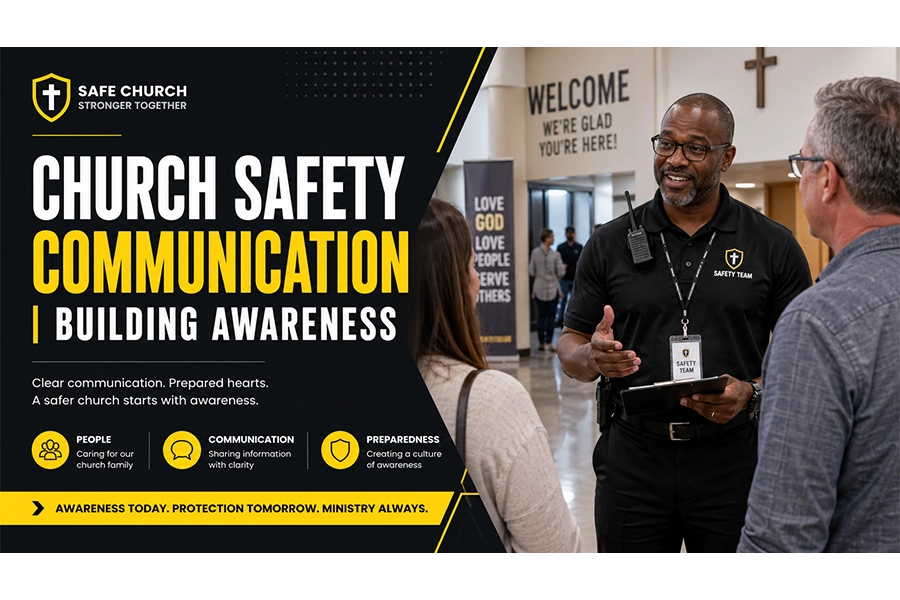
Church safety communication is one of the most important steps a church can take when building a safer congregation, especially when pastors, Safety Directors, volunteers, and members are not yet sure how safety fits into ministry.
Many churches want to be safer, but they do not always know how to talk about safety without creating fear, confusion, or resistance. Some leaders worry that safety conversations will make people uncomfortable. Others assume church safety is only for law enforcement officers, armed team members, or large churches with formal security programs.
That is not true.
Every church, regardless of size, can begin with one simple step: share the vision. Before a Safety Ministry becomes a team, a policy, a training calendar, or an emergency plan, it begins as a clear message. Safety matters because people matter. Preparation matters because fellowship, worship, and ministry are worth protecting.
The Vision Sharing Guide: Starting the Path to a Safer Congregation helps churches begin that conversation with wisdom, humility, and practical direction. This article expands on that guide with strategies to communicate the importance of safety within your church in a way that builds trust, encourages participation, and keeps the focus on ministry.
Key Takeaways for Church Safety Communication
Church safety communication should be clear, calm, and mission-driven. The goal is not to scare the congregation. The goal is to help people understand that safety supports the church’s calling to worship, serve, disciple, and care for one another.
A strong safety message should do four things:
- Explain why safety matters. Connect safety to protecting fellowship, peace, children, guests, volunteers, and the worship environment.
- Invite conversation. Give church members a voice so they feel included, not managed.
- Connect safety to ministry. Frame preparation as stewardship, hospitality, and love for the flock.
- Lead to action. Encourage one practical next step, such as a walkthrough, leadership meeting, training session, or review of the church safety plan.
When churches communicate safety well, they build awareness before an emergency ever happens.
Why Is Church Safety Communication Important?
Church safety communication matters because people are more likely to support what they understand. If church members only hear about safety when there is a crisis, a new policy, or a visible change, they may feel surprised or uncertain. But when leaders explain the heart behind safety early and often, the congregation can see the purpose.
Safety is not about suspicion. Safety is not about turning the church into a fortress. Safety is about protecting a place where people come to worship, pray, learn, serve, and find peace.
For many churches, the first barrier is not money or equipment. It is awareness. Members may not realize how many safety issues a church faces on a regular basis. These can include medical emergencies, severe weather, fire hazards, missing children, disruptive behavior, domestic conflict, theft, facility concerns, and emergency communication gaps.
A church does not need to live in fear of these possibilities. But it should be honest about them.
The Bible gives us a balanced picture of faith and watchfulness. Nehemiah 4:9 says the people prayed and set a watch. That is a powerful model for church safety. Prayer and preparation are not enemies. Faith and readiness belong together.
Church safety communication helps the congregation understand that balance.
How Should a Church Talk About Safety Without Creating Fear?
The best way to talk about church safety is to begin with mission, not threat.
If the first message people hear is centered only on danger, they may become anxious or defensive. But when leaders begin with the church’s mission, safety becomes easier to understand. The message should be simple: we prepare because we love people and want ministry to continue in peace.
A helpful way to communicate this is to focus on what safety protects.
Safety protects worship.
Safety protects children.
Safety protects guests.
Safety protects volunteers.
Safety protects the elderly and vulnerable.
Safety protects the church’s ability to gather and serve.
When you speak about safety, avoid dramatic language. Be honest, but stay steady. Use words that reflect care, stewardship, and responsibility.
Instead of saying, “Something terrible could happen here,” say, “We want to be prepared to care for people well if something unexpected happens.”
Instead of saying, “We need security because the world is dangerous,” say, “We want our church to be a place where people can worship with confidence and peace.”
Instead of saying, “Everyone needs to watch for threats,” say, “Everyone can help create a safe, welcoming environment by staying aware and communicating concerns.”
This kind of language keeps the conversation grounded. It helps people see safety as part of church life, not a separate or intimidating program.
Sharing Your Vision for a Safer Congregation
A church safety vision explains why safety matters and how it serves the whole congregation. It should be clear enough for leadership to support, simple enough for volunteers to repeat, and warm enough for members to receive.
A strong vision statement might sound like this:
“Our goal is to help create a safe, welcoming, and peaceful environment where our church family can worship, serve, and grow together. We believe safety is a shared responsibility and an act of faithful stewardship.”
That message is not complicated. It does not rely on tactical language. It points people back to the purpose.
What Should a Church Safety Vision Include?
Your safety vision should include three key ideas.
First, explain that safety supports fellowship and peace. Church safety is not just about responding to emergencies. It is about creating an environment where people can focus on worship and relationships without unnecessary concern.
Second, show how safety benefits everyone. A parent dropping off a child, a senior adult walking through the parking lot, a first-time guest entering the lobby, and a volunteer serving in the nursery all benefit from thoughtful preparation.
Third, emphasize shared responsibility. The Safety Team may lead the effort, but they should not carry it alone. Ushers, greeters, ministry leaders, staff, parents, and members all have a role in noticing concerns, communicating clearly, and supporting a culture of care.
Safety awareness grows when people understand that they are part of the mission.
Practical Examples Help People Understand Church Safety
Many church members will connect with safety more quickly when they hear practical examples. Abstract statements like “we need to be prepared” are true, but examples make the message real.
For instance, you might explain that a safety walkthrough can help identify blocked exits, poor lighting, unclear signage, or unsecured children’s areas. These are not dramatic issues, but they matter. Fixing them can prevent injuries, reduce confusion, and help guests feel more comfortable.
You might also describe how a trained volunteer can respond more confidently when someone faints during worship, a child wanders away from a classroom, or severe weather interrupts a service. These are common situations where preparation makes a real difference.
The point is not to overwhelm people with every possible scenario. The point is to show that safety is practical, reasonable, and connected to everyday ministry.
When communicating with the congregation, use examples like these:
- A medical emergency during service. A trained team knows who will call 911, who will retrieve the first aid kit or AED, and who will guide emergency responders to the right location.
- A child safety concern. A clear check-in and pickup process helps protect children and gives parents confidence.
- A severe weather alert. A prepared church knows where people should go and how leaders will communicate instructions.
- A disruptive person in the lobby. Trained volunteers know how to stay calm, create space, and ask for help before a situation escalates.
- A facility hazard. A simple walkthrough helps identify loose rugs, blocked exits, poor lighting, or unlocked access points.
Examples help church members understand that safety is not only about rare, high-risk events. It is also about daily readiness and thoughtful care.
Creating Conversations About Church Safety
Communication should not be one-way. If leaders only announce safety changes without inviting feedback, members may feel left out or confused. Healthy church safety communication creates conversations.
Informal discussions are a good place to start. A pastor, Safety Director, ministry leader, or elder can gather a small group of volunteers and ask open-ended questions. These conversations do not need to be formal meetings. They can happen after service, during a ministry team meeting, at a leadership gathering, or during a planned safety discussion.
The goal is to listen before launching.
What Questions Should Church Leaders Ask?
Good questions help people think about safety without feeling accused or pressured. They also reveal concerns that leadership may not see from the top down.
Consider asking:
- “How can we make our church a safer place for everyone?”
- “Where do guests or members seem confused when they enter our building?”
- “What concerns have parents shared about children’s ministry safety?”
- “What would help volunteers feel more prepared during an emergency?”
- “Are there areas of the building or parking lot that feel unsafe or overlooked?”
- “How can we improve communication during services or events?”
These questions invite people into the process. They also communicate humility. Church leaders do not need to pretend they have already seen everything. A strong safety culture grows when people are willing to learn from one another.
Listening Builds Trust Before Policies Are Introduced
Safety policies are important, but policies are received better when trust already exists. If a church introduces a new children’s check-in rule, door access procedure, medical response plan, or emergency communication process without explanation, some people may resist.
They may ask, “Why are we doing this?”
They may wonder, “Do we really need this?”
They may think, “This feels inconvenient.”
Those questions are not always signs of rebellion. Sometimes they are signs that the vision has not been clearly communicated.
Before introducing changes, explain the reason. A new procedure should not feel like control. It should feel like care.
For example, if the church updates its children’s ministry pickup process, explain that the purpose is to protect children, support volunteers, and give parents peace of mind. If the church begins locking certain doors after service starts, explain that the goal is to guide guests through a monitored entrance while reducing confusion and improving awareness.
People are more likely to support safety practices when they understand the “why” behind them.
Highlighting the Broader Impact of Church Safety
Church safety is not only about emergency response. It affects the entire life of the church.
A prepared church is better able to welcome guests, protect children, support volunteers, respond to needs, and maintain peace during unexpected situations. Safety helps ministry continue with less confusion and more confidence.
This broader impact is important to communicate because some members may assume safety only matters during extreme events. In reality, safety touches nearly every ministry area.
Children’s ministry depends on safety.
Hospitality depends on safety.
Parking lot ministry depends on safety.
Student ministry depends on safety.
Worship gatherings depend on safety.
Special events depend on safety.
Pastoral care often intersects with safety.
When safety is communicated as part of the church’s mission, it becomes less isolated. It is no longer “the Safety Team’s issue.” It becomes part of how the church cares for people.
What Does the Bible Say About Church Safety?
The Bible does not use the modern phrase “church safety ministry,” but it gives clear principles that support preparation, watchfulness, order, and care for others.
Jesus describes Himself as the Good Shepherd in John 10. A shepherd knows the flock, cares for the flock, and protects the flock. Church leaders are not Jesus, but they are called to shepherd with humility and responsibility.
Nehemiah gives another helpful picture. When God’s people rebuilt the wall, they prayed and posted guards. They trusted the Lord while also taking practical action. That example helps churches understand that readiness is not a lack of faith. It is faithful stewardship.
First Corinthians 14:40 says things should be done decently and in order. While that passage speaks to order in worship, the principle also reminds us that confusion does not serve the church well. Clear plans, trained volunteers, and thoughtful communication help reduce confusion when pressure rises.
Romans 12:18 encourages believers to live peaceably as much as possible. Safety efforts can support peace by helping the church address concerns early, respond calmly, and care for people wisely.
Church safety communication should reflect these biblical values. We are not driven by fear. We are guided by love, wisdom, and responsibility.
How Can Safety Directors Communicate With Church Leadership?
Before safety becomes a churchwide conversation, it should be shared clearly with leadership. Pastors, elders, deacons, administrators, and ministry directors need to understand the vision before they are asked to support action steps.
When speaking with leadership, keep the message focused and practical. Do not begin with a long list of problems. Begin with the purpose.
Explain that the goal is to protect the congregation, support ministry, and prepare reasonably for foreseeable concerns. Then identify a few practical next steps.
A Safety Director might say:
“I would like us to begin building a stronger safety culture by sharing a clear vision with our leaders, listening to ministry concerns, and taking one practical step, such as a facility walkthrough or basic emergency response training.”
This kind of approach is calm and actionable.
Church leadership may also need to consider policies, insurance expectations, local laws, and legal responsibilities related to children’s safety, medical response, emergency planning, weapons policies, and volunteer screening. Churches should seek guidance from qualified legal counsel, insurance representatives, and local emergency professionals when needed. Safety communication should never promise more than the church can provide, but it should show that the church is preparing responsibly.
Taking the First Actionable Step
A vision becomes stronger when it leads to action. After sharing the importance of safety, choose one next step that is realistic for your church.
Do not try to build everything at once. A small church with volunteers can begin with simple, meaningful actions. The goal is progress, not perfection.
Practical first steps include:
- Meet with church leadership. Share the vision for safety and ask for support before making public changes.
- Host a safety conversation. Invite ministry leaders, ushers, greeters, parents, and volunteers to share concerns and ideas.
- Conduct a facility walkthrough. Look for blocked exits, lighting issues, trip hazards, unclear signage, unlocked doors, and communication gaps.
- Review current emergency plans. Identify whether your church has written steps for medical emergencies, fire, severe weather, missing children, and disruptive behavior.
- Schedule basic training. Start with practical topics such as situational awareness, emergency communication, de-escalation, first aid, or child safety procedures.
- Create a communication plan. Decide how leaders will share safety updates with the congregation in a clear and encouraging way.
These steps help move safety from an idea to a ministry practice.
How Can Churches Keep Safety Communication Positive?
Safety communication should be repeated, not rushed. A single announcement will not build a safety culture. Churches need steady reminders that are practical, calm, and connected to ministry.
Keep the tone positive by celebrating progress. If volunteers complete training, thank them. If a walkthrough identifies improvements, share the next step. If a new procedure helps children’s ministry run more smoothly, explain the benefit.
Avoid making safety updates sound like warnings only. Instead, make them part of the church’s regular discipleship and leadership rhythm.
For example, a pastor might say:
“We are grateful for the volunteers who help make our church a safe and welcoming place each week. As part of our ongoing care for the congregation, we are continuing to improve our emergency plans and train our teams.”
That message is simple, warm, and reassuring. It helps people see safety as a normal part of church life.
Common Mistakes to Avoid When Talking About Church Safety
Even well-meaning churches can create confusion if they communicate safety poorly. The goal is not only to say the right things, but to say them in the right spirit.
Avoid these common mistakes:
- Leading with fear. Fear may get attention, but it does not build long-term trust. Lead with mission, stewardship, and care.
- Using too much tactical language. Many volunteers do not have law enforcement or military backgrounds. Use plain language and define terms clearly.
- Making sudden changes without explanation. People are more likely to support safety procedures when they understand the reason behind them.
- Leaving ministry leaders out of the conversation. Children’s ministry, hospitality, worship, youth ministry, and facilities teams all have safety insights.
- Treating safety as one person’s job. A Safety Director can lead, but the whole church helps create a safer environment.
- Failing to take action. Vision without action can create frustration. Choose one practical next step and follow through.
Avoiding these mistakes helps the church build a safety culture that is steady, humble, and effective.
A Safer Congregation Starts With Shared Vision
Church safety communication is not about creating alarm. It is about creating awareness. It is about helping the congregation understand that safety is part of loving people well.
A safer church begins when leaders share the vision, invite conversation, connect safety to the mission, and take the first practical step. That step may be small, but it matters.
When people understand why safety matters, they are more willing to participate. When they are invited into the conversation, they are more likely to support the plan. When safety is connected to biblical stewardship, it becomes part of the church’s calling to care for the flock.
Every church can begin somewhere.
Start by sharing the vision. Ask good questions. Listen well. Walk the property. Train the team. Review the plan. Take the next faithful step.
Your church does not need to have everything figured out today. But it does need to begin.
Call to Action: Start the Path to a Safer Congregation
Use the Vision Sharing Guide: Starting the Path to a Safer Congregation as a practical first step for building awareness in your church. Share it with your pastor, Safety Director, elders, deacons, ministry leaders, or volunteer team.
Then take one action this week. Schedule a conversation. Walk the building. Review your safety plan. Identify one gap. Invite one more person into the mission.
For churches ready to go deeper, explore the Safety Member Certification from Sheepdog Church Security Academy. It is designed to help church Safety Team members build practical skills, strengthen awareness, and serve with confidence, even if they do not come from a law enforcement background.
A safer congregation begins with a clear vision, faithful leadership, and a willingness to prepare before the need becomes urgent.